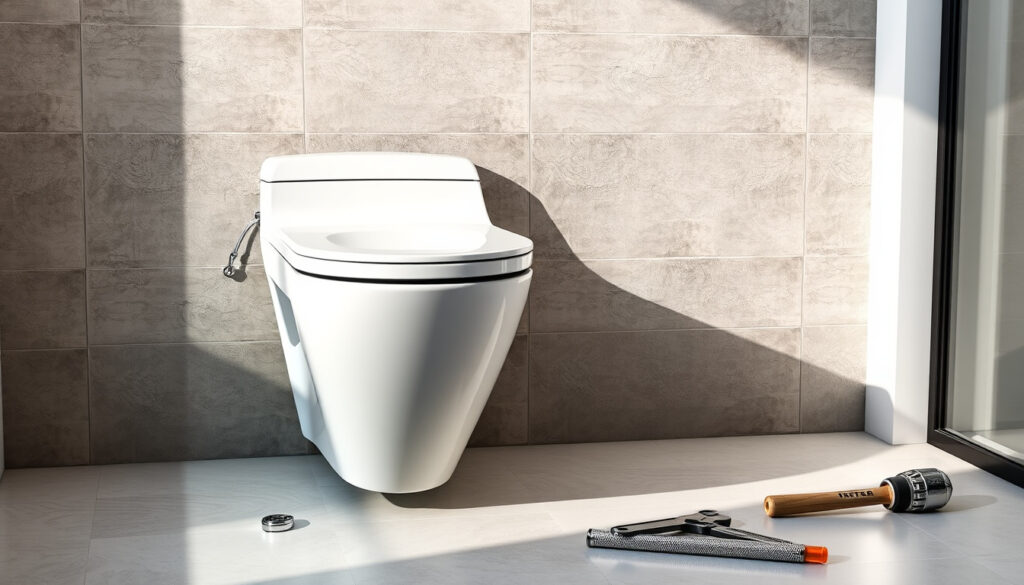
Back to Wall Toilet Guide: Pros, Cons, Installation & Tips
Anyone who has tried fitting a standard close-coupled toilet into a small UK bathroom knows the struggle of awkward pipework and hard-to-clean crevices. Back to wall toilets offer a cleaner alternative: the pan sits flush against the wall, and the cistern disappears behind a furniture unit or stud wall.
Back to wall toilet market share (UK): 25% of new toilet installations (2024 estimate) ·
Typical price range (pan only): £80 to £350 ·
Concealed cistern depth: 8–12 cm (fits most furniture units) ·
Average space saved vs close-coupled: 10–15 cm in room length
Quick snapshot
- Cistern hides behind furniture or wall (Tapron (bathroom retailer))
- Pan sits flush against wall (Commercial Washrooms Ltd (specialist installer))
- Rimless design available for easier cleaning (Tapron (bathroom retailer))
- Exact cost savings over time due to fewer repairs (Tapron (bathroom retailer))
- Long term reliability of concealed cistern mechanisms vs exposed flush valves (Commercial Washrooms Ltd (specialist installer))
- Installation requires concealed cistern setup — adds complexity vs close coupled models (Commercial Washrooms Ltd (specialist installer))
- Consider rimless pans and soft‑close seats for added convenience (Tapron (bathroom retailer))
Six key specs tell the story of what fits where and what you’ll pay.
| Specification | Typical value |
|---|---|
| Typical price (pan only) | £80–£350 |
| Standard width | 355–380 mm |
| Standard depth (pan) | 480–530 mm |
| Concealed cistern depth | 80–120 mm |
| Common waste pipe size | 100 mm (soil pipe) |
| Soft close seat included | Usually sold separately |
What is a back to wall toilet?
A back to wall toilet is a design where the pan sits flush against the wall and the cistern is concealed behind a furniture unit or within a stud wall (Tapron (bathroom retailer)). Only a flush button or panel remains visible on the hidden cistern. This contrasts with close-coupled toilets where the cistern bolts directly onto the back of the pan and stands exposed.
How is it different from a close coupled toilet?
- Close coupled: cistern mounted directly on the pan, pipework visible, crevices around the back.
- Back to wall: pan flush against wall, cistern hidden, no visible pipework behind the pan (Commercial Washrooms Ltd (specialist installer)).
- Wall hung: pan suspended from the wall, cistern inside the frame, floor space underneath – even more open than back to wall.
What does the cistern look like?
The concealed cistern is a slim, rectangular box mounted on the wall behind the pan. It connects to the pan via a rigid 90‑degree flush pipe and a 4‑inch pan connector (Victorian Plumbing (installation manual)). Typical cistern depth is 80–120 mm, which fits inside standard furniture units or a stud‑wall cavity.
Back to wall toilets trade a simpler installation for a cleaner look and easier cleaning – the buyer decides which matters more for their bathroom layout.
The implication: choosing a back to wall toilet means prioritising aesthetics and hygiene over installation simplicity from the outset.
What are the disadvantages of a back to wall toilet?
No design is perfect. Three drawbacks stand out for UK homeowners.
Is installation more complex?
Yes. Back to wall toilets require first‑fix plumbing completed before the furniture unit or DUCT set is fitted (Victorian Plumbing (installation manual)). The cistern must be mounted and connected inside a limited space. Plumbers often charge more for concealed cistern work because it takes longer and demands precision.
Is repair access harder?
Accessing the cistern for repairs may require removing a furniture panel or even the whole unit. With a close‑coupled toilet, you can reach the cistern simply by lifting the lid. For back to wall, any internal fault (flush valve, fill valve) means dismantling part of the installation (Tapron (bathroom retailer)).
A homeowner who picks a back to wall toilet for aesthetics must accept that future maintenance will be less straightforward – and potentially more expensive – than a standard close‑coupled unit.
The pattern: each design choice that improves the look adds a degree of difficulty somewhere else in the product lifecycle.
Are back to wall toilets a good idea?
For many UK bathrooms, the answer is yes – but it depends on your priorities.
What are the main benefits?
Back to wall toilets are a slick, space-saving solution for a modern bathroom.
— Tapron (bathroom retailer)
- Space saving: Saves 10–15 cm of floor depth compared to close‑coupled models (Tapron (bathroom retailer)).
- Easier cleaning: Rimless bowls reduce bacteria traps; no crevices around pipework or cistern (Commercial Washrooms Ltd (specialist installer)).
- Modern aesthetic: Clean lines with no exposed pipework.
- Soft close seats: Most back to wall toilets offer soft‑close seats for added convenience (Victorian Plumbing (installation manual)).
Is the sleek look worth it?
The concealed cistern setup adds complexity but delivers a clean finish.
— Commercial Washrooms Ltd (specialist installer)
The trade‑off: a more complicated installation and harder access to the cistern. If you value a minimalist bathroom and are willing to budget for a professional fitter, the sleek look is worth it. For tight renovation budgets or DIY installations, a close‑coupled toilet remains simpler and cheaper.
The 10–15 cm saved may be the difference between fitting a shower screen or not in a compact UK en‑suite. The space gain is real, but the repair scenario is the hidden cost.
What this means: the back to wall toilet is a deliberate trade that makes sense only when the buyer fully accepts both the upfront complexity and the long-term maintenance realities.
Can you replace a regular toilet with a back to wall toilet?
In most cases, yes – but expect modification work.
What modifications are needed?
- New furniture unit or wall frame to hide the cistern.
- Waste pipe (soil pipe) position must align with the pan outlet – vertical or horizontal outlet models are available (Commercial Washrooms Ltd (specialist installer)).
- Existing floor flange may need repositioning.
- If the old toilet was close coupled, the water supply connection height may differ.
Does the waste pipe position matter?
Yes. Most back to wall pans accept a 100 mm soil pipe connection either through the wall or through the floor (Victorian Plumbing (installation manual)). Measure your existing pipe centre and compare with the pan’s outlet position before buying.
The implication: replacing a regular toilet with a back to wall model is not a like‑for‑like swap. It’s a mini‑bathroom refurbishment that may require carpentry and tiling work if the wall is opened.
Back to wall toilet installation: what to expect
If you decide to go ahead, here is what the job involves.
What tools are needed?
Essential tools include a drill, screwdriver, thread seal tape, hand saw for cutting plastic, petroleum jelly, safety knife, and silicone sealant (Tapron (bathroom retailer)).
Should a professional install it?
Most plumbers quote 2–4 hours for a back to wall toilet installation. The job involves: completing first‑fix plumbing, mounting the DUCT set or furniture unit, connecting the flush pipe and pan connector, securing the pan, and sealing (Commercial Washrooms Ltd (specialist installer)). Unless you are experienced with bathroom plumbing, a professional is recommended. Mistakes can lead to leaks inside a sealed cavity.
The three designs compared across five factors.
| Comparison | Back to wall | Close coupled | Wall hung |
|---|---|---|---|
| Floor space saved | 10–15 cm | None | Full clearance underneath (30+ cm) |
| Cistern visibility | Hidden in unit or wall | Exposed on pan | Hidden in wall frame |
| Installation complexity | Moderate (requires frame/unit) | Simple (direct mount) | High (requires wall frame and tiling) |
| Repair access | Requires panel removal | Easy (lift lid) | Requires access panel in wall |
| Typical cost (pan + cistern + frame) | £150–£500 | £80–£250 | £200–£700 |
The pattern: each step up in concealment and aesthetics adds cost and labour, while reducing future access convenience.
Upsides
- Saves floor space in compact bathrooms
- Easier cleaning – rimless designs available
- Modern, minimalist look
- Soft‑close seats standard on many models
Downsides
- More complex installation, often costing more
- Harder access to cistern for repairs
- Higher upfront cost than close‑coupled toilets
- May require new furniture unit or wall frame
For the UK buyer weighing a back to wall toilet, the choice is clear: accept a more complex installation and higher initial cost in exchange for a cleaner look and easier daily cleaning – or stick with a traditional close‑coupled toilet that is simpler to install and maintain.
Related reading: Back to Wall Toilet Installation Guide UK · Back to Wall Toilets — The Complete Guide
youtube.com, youtube.com, youtube.com, heritagebathrooms.com, betterbathrooms.com
For a comprehensive overview of the pros, cons, and installation process, refer to this back to wall toilet guide.
Frequently asked questions
What is the difference between a back to wall and a wall hung toilet?
A back to wall toilet sits on the floor flush against the wall with a concealed cistern. A wall hung toilet is suspended from the wall, leaving the floor completely clear. Wall hung models offer even more space underneath but require a sturdy wall frame and are generally more expensive.
Do back to wall toilets use a concealed cistern?
Yes – the cistern is hidden inside a furniture unit or a stud wall. Only the flush button or panel is visible.
How do I access the cistern in a back to wall toilet?
You must remove a panel or the entire furniture unit. Some models have a separate access hatch on the front. Always check the manufacturer’s instructions before purchasing.
Can I install a back to wall toilet myself?
It is possible if you have plumbing experience, but most DIYers should hire a professional plumber. The concealed cistern setup requires precise pipe connections and alignment.
What is the best back to wall toilet brand?
Popular UK brands include Ideal Standard, Villeroy & Boch, and Roca. Each offers various pan dimensions and flush mechanisms. Visit a showroom to check seat comfort and flush action.
Are back to wall toilets more expensive than other toilets?
They typically cost more than close‑coupled toilets (pan only £80–£350 vs £50–£200) but less than wall hung models. The added cost comes from the furniture unit or wall frame needed to conceal the cistern.
Do back to wall toilets come with a seat included?
Usually not. Soft‑close seats are sold separately. Some models include a seat as part of the package – check the product description.
More related posts
 Assassin’s Creed Shadows Reviews – Scores, Pros and Verdict
 Shazad Latif: Biography, Ethnicity, Name Change, Career
 Chelsea FC Away Kit 25/26: Color, Design & Buy Now
 What Is an Ion? Simple Definition, Examples & Explanation
 Art Shop Near Me: Expert Guide to Local Art Supplies & Rules
 Chris Cornell: Cause of Death, Sobriety, and Funeral
 The Elder Scrolls IV: Oblivion – 2024 Play and Mod Guide
 Senegal National Football Team Players: Squad, Stars & 2026