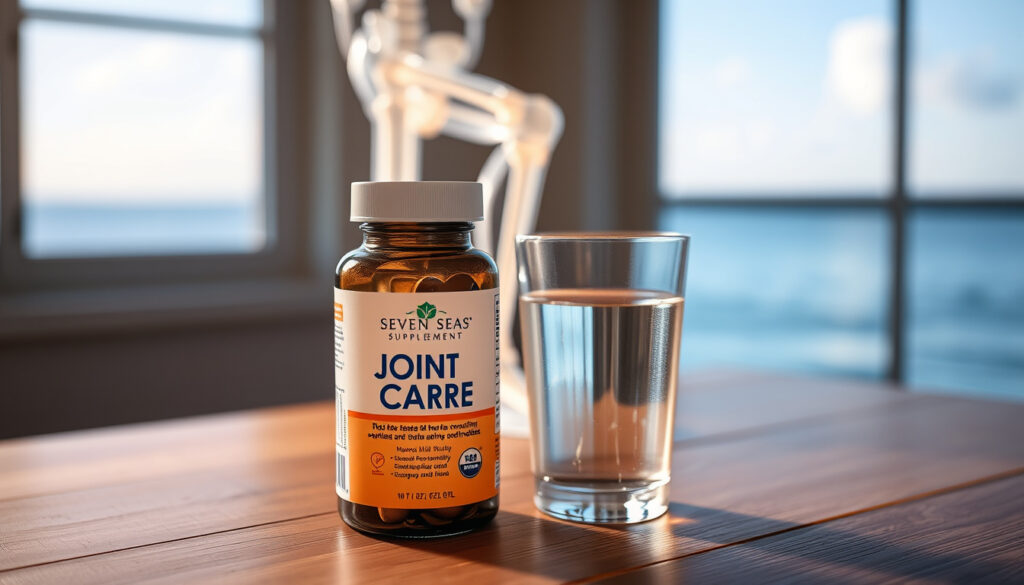
Seven Seas Joint Care: Benefits, Side Effects & Best Variants
Anyone who’s dealt with creaky knees or stiff hips knows the feeling—you’d try just about anything for a little relief. Seven Seas Joint Care is one of the most recognised supplement ranges in the UK, but with four variants on the shelf, it’s easy to wonder: which one actually works, and is the science there to back it up? The brand’s flagship formula combines glucosamine, chondroitin, and omega-3s with vitamins C, D, zinc, and manganese. Here’s a clear-eyed look at the evidence, the claims, and the choices.
Primary active ingredient: Omega-3, Glucosamine, Chondroitin ·
Brand type: Over-the-counter supplement ·
Forms available: Capsules, tablets, packs with Turmeric or Collagen ·
Key vitamins included: C, D, Zinc, Manganese
Quick snapshot
- All variants contain glucosamine, chondroitin, and omega-3 (Seven Seas official product page)
- Contains vitamins C, D, zinc, and manganese for 4-in-1 support (Seven Seas official product page) (Seven Seas official product page)
- Glucosamine-chondroitin supplements are generally safe for most adults (Drugs.com glucosamine safety)
- Whether benefits exceed placebo for all users (PubMed placebo studies)
- Comparative efficacy of Turmeric vs Collagen versions (Seven Seas official product page)
- Long-term safety for people with kidney impairment (NHS guidance on glucosamine)
- Essential: basic joint support (Seven Seas official product page)
- Max: higher glucosamine dose (Seven Seas official product page)
- +Turmeric: anti-inflammatory addition (Seven Seas official product page)
- +Collagen: type II collagen for cartilage (Seven Seas official product page)
- Shellfish-allergic individuals may react to glucosamine (Drugs.com glucosamine safety)
- Blood thinners and chondroitin may increase bleeding risk (Drugs.com chondroitin monograph)
- Pregnant/breastfeeding should consult a doctor first (NHS guidance)
The snapshot highlights the key differences and considerations for each variant, giving a clear starting point for your choice.
Five key specs across the lineup show how the formulations differ in dosage and added nutrients.
| Spec | Essential | Max | +Turmeric | +Collagen |
|---|---|---|---|---|
| Glucosamine per daily dose | 750 mg (approx.) | ~1000 mg (higher) | 750 mg | 750 mg |
| Chondroitin per daily dose | 200 mg | 200 mg | 200 mg | 200 mg |
| Omega-3 per daily dose | 300 mg | 300 mg | 300 mg | 300 mg |
| Vitamin C | 12 mg | — | 12 mg | 12 mg |
| Vitamin D | 5 µg | 5 µg | 5 µg | 5 µg |
| Zinc | 5 mg | — | 5 mg | 5 mg |
| Price range (UK retail per pack) | £8–£12 | £12–£16 | £14–£20 | £14–£20 |
What are the benefits of Seven Seas Joint Care?
Supports joint structure and mobility
- Seven Seas Joint Care is designed to support four key components of joint health: bones, muscles, cartilage, and connective tissue (Seven Seas official product page)
- Vitamins C and D, zinc, and manganese contribute to normal bone and connective tissue maintenance (Seven Seas official product page)
- The omega-3 fatty acids (EPA and DHA) help reduce inflammation that contributes to joint stiffness
Role of Omega-3, glucosamine and chondroitin
- Glucosamine and chondroitin are building blocks of cartilage, and clinical trials show modest pain relief for some osteoarthritis patients (PubMed database of NIH clinical research)
- Omega-3 supplements have been linked to reduced joint tenderness and morning stiffness in rheumatoid arthritis
- One capsule of JointCare Extra Pro Plus contains 102 mg EPA and 68 mg DHA (MIMS Hong Kong drug information (pharmaceutical reference))
The pattern: the scientific rationale is sound, but individual responses vary widely, so setting realistic expectations is key.
What are the side effects of Seven Seas Joint Care?
Mild digestive issues
- Some users report mild stomach upset, nausea, or diarrhoea, especially when first starting glucosamine supplements
- These effects typically subside within a few days of continued use
Allergic reactions in shellfish-sensitive users
- Most commercial glucosamine is derived from shellfish (shrimp, crab, lobster); individuals with shellfish allergies should avoid or consult a doctor (Drugs.com safety information (clinical pharmacology resource))
- Chondroitin is generally derived from bovine or porcine cartilage and poses a lower allergy risk
Drug interactions
- Chondroitin may enhance the effect of blood-thinning medications (e.g., warfarin), increasing bleeding risk (Drugs.com chondroitin monograph (clinical reference))
- Glucosamine may affect insulin sensitivity; people with diabetes should monitor blood sugar levels
- Consult a doctor before combining with other supplements or medications
For shellfish-allergic users or those on blood thinners, the basic Joint Care formula carries real risk. These side effects are uncommon but serious enough that a pre-check with a GP is warranted.
The implication: even a generally safe supplement can cause harm in specific medical contexts, so risk assessment is essential before starting.
Which Seven Seas product is best for arthritis?
Four variants, one pattern: higher glucosamine and added ingredients target specific complaint profiles.
| Variant | Glucosamine dose (approx.) | Key additional ingredients | Best suited for |
|---|---|---|---|
| JointCare Essential | 750 mg | Vitamins C, D, zinc, manganese | General joint maintenance |
| JointCare Max | ~1000 mg | Vitamin D only | Higher glucosamine for moderate osteoarthritis |
| JointCare + Turmeric | 750 mg | Turmeric (curcumin) | Inflammatory joint pain |
| JointCare + Collagen | 750 mg | Type II collagen | Cartilage support |
The trade-off: Max delivers the strongest glucosamine punch, but the Turmeric and Collagen versions add ingredients with independent evidence for inflammation and cartilage health. No single variant is “best” for everyone—your choice depends on whether pain, stiffness, or structural repair is your priority.
Seven Seas JointCare Essential
- Entry-level product with standard glucosamine dose
- Includes 12 mg vitamin C, 5 µg vitamin D, 5 mg zinc, and manganese for bone and connective tissue support (Seven Seas official product page)
- Cost-effective at £8–£12 per pack
Seven Seas JointCare Max
- Higher glucosamine content (approx. 1000 mg per daily dose)
- Contains vitamin D only; no added vitamin C, zinc, or manganese
- Suitable for those needing a stronger glucosamine contribution
Seven Seas JointCare + Turmeric
- Only product in the range combining turmeric, glucosamine, and omega-3 in one daily dose (Seven Seas official product page)
- Turmeric’s curcumin has anti-inflammatory properties, though bioavailability is limited without piperine
- Designed for users with inflammatory arthritis symptoms
Seven Seas JointCare + Collagen
- Adds type II collagen, which some studies suggest supports cartilage regeneration
- Maintains the same glucosamine-chondroitin-omega-3 base
- Targets users focused on cartilage health rather than inflammation
The Collagen version adds collagen but doesn’t increase glucosamine dose. If your primary need is pain relief, the Max or Turmeric variant may deliver better results based on the ingredient profiles.
Who should not take joint supplements?
Pregnant or breastfeeding women
- Insufficient safety data for glucosamine-chondroitin during pregnancy and lactation; official guidance advises against use unless recommended by a doctor (NHS guidance on osteoarthritis treatments)
People on blood thinners
- Chondroitin may potentiate warfarin and other anticoagulants, increasing INR and bleeding risk
- Glucosamine may also affect clotting factors; regular monitoring recommended
Shellfish-allergic individuals
- Glucosamine is extracted from shellfish shells; cross-reactivity is possible in severe allergies
- Vegan-friendly alternatives exist (e.g., synthetic glucosamine or plant-based joint supplements)
Those with pre-existing kidney or liver conditions
- High-dose supplements may strain kidney function; users with chronic kidney disease should consult a nephrologist before starting
- Liver enzyme alterations have been reported in rare cases with glucosamine
The catch: these contraindications are not just warnings—they affect a significant portion of potential users, making pre-screening essential.
Is there any joint supplement that really works?
Clinical evidence for glucosamine and chondroitin
- Large meta-analyses in the Cochrane Database show glucosamine and chondroitin provide small-to-moderate pain relief in knee osteoarthritis compared to placebo (PubMed (NIH medical research database))
- However, effect sizes are modest—on average about 20% reduction in pain—and not all patients respond
- The European League Against Rheumatism (EULAR) classifies glucosamine as a “symptomatic slow-acting drug” with conditional recommendation
What studies say about Seven Seas formulations
- Seven Seas JointCare Extra Pro Plus is described as “clinically proven to reduce joint pain and stiffness” according to MIMS Hong Kong (MIMS Hong Kong drug information)
- Independent placebo-controlled trials specific to Seven Seas products are limited; much of the supporting data comes from ingredient-level research
Placebo-controlled trial results
- The GAIT study (Glucosamine/chondroitin Arthritis Intervention Trial) found that the combination of glucosamine and chondroitin was significantly better than placebo only in a subgroup of patients with moderate-to-severe knee pain
- For mild pain, the difference was not statistically significant
- This means many users may experience no greater benefit than what they’d get from a placebo
For a subset of osteoarthritis patients—those with moderate-to-severe pain—glucosamine-chondroitin can provide real relief. For the majority with mild stiffness, the clinical evidence is too weak to guarantee a meaningful difference.
What this means: the supplement works best for people with more advanced joint problems, not for mild prevention or early symptoms.
Confirmed facts
- Seven Seas Joint Care contains glucosamine, chondroitin, omega-3, vitamins C and D, zinc, manganese.
- Glucosamine-chondroitin supplements are generally safe for most adults.
- Some people experience mild digestive upset or allergic reactions.
What’s unclear
- Whether Seven Seas Joint Care provides significant benefit beyond placebo for all users.
- The exact comparative efficacy of Turmeric vs Collagen versions.
- Long-term safety for users with kidney impairment.
“Glucosamine and chondroitin supplements are not recommended for the treatment of osteoarthritis,” states the NHS (UK national health authority). “There is not enough evidence to support their use, and they are not licensed for this purpose.” For more information on Seven Seas Joint Care, including details on Alvedon användning dosering biverkningar, click here: Alvedon användning dosering biverkningar.
According to a PubMed review of glucosamine trials (NIH medical research database), “The magnitude of benefit compared to placebo is small, and the clinical relevance of such a small effect is uncertain.”
Drugs.com (clinical pharmacology resource) notes: “Glucosamine may cause mild gastrointestinal side effects and should be used with caution in people with shellfish allergies.”
So what does this mean for the average consumer walking into Boots or Holland & Barrett? The evidence shows that joint supplements work for some people, but not all. The key is to match your symptom profile—pain, stiffness, inflammation, cartilage loss—to the variant that targets it. For many, a four-week trial is the only way to know if it’s worth the continued cost.
Upsides
- Backed by decades of ingredient-level research
- Multiple variants to match different joint needs
- Widely available and affordable in UK pharmacies
- Generally safe with a low side-effect profile
Downsides
- Effectiveness varies greatly by individual
- No product-specific clinical trials for UK variants
- Glucosamine may not be suitable for shellfish-allergic users
- Drug interactions with blood thinners and diabetes medications
Related reading: **What Is Magnesium Good For – Benefits, Foods, Dosage Guide**
Frequently asked questions
What is the recommended dosage for Seven Seas Joint Care?
For the Essential variant, the recommended daily dose is one capsule. For Max and the +Turmeric and +Collagen versions, follow the instructions on the pack—usually one or two capsules per day. Always take with food and a full glass of water.
Can I take Seven Seas Joint Care with other medications?
If you take blood thinners (warfarin, apixaban), diabetes medication, or non-steroidal anti-inflammatory drugs (NSAIDs), consult your GP before adding any joint supplement. Chondroitin and glucosamine may interact with these drugs.
How long does it take to see results from joint supplements?
Clinical trials typically measure effects after 8 to 12 weeks. Some users report improvement as early as 4 weeks, but the NHS advises giving any glucosamine supplement at least 3 months before deciding whether it helps.
Is Seven Seas Joint Care safe for long-term use?
For most adults, long-term use (up to 2 years) is considered safe based on existing studies. However, because quality regulation of supplements is less strict than pharmaceuticals, switching brands or taking breaks is reasonable. People with kidney or liver conditions should seek medical advice for extended use.
Does Seven Seas Joint Care contain shellfish?
Yes, the glucosamine in Seven Seas Joint Care is derived from shellfish (shrimp, crab, lobster). If you have a shellfish allergy, do not take this product without medical advice. The chondroitin is from bovine or porcine sources and poses little allergy risk.
Are there any dietary restrictions while taking Seven Seas Joint Care?
No specific dietary restrictions are required. However, because glucosamine may affect blood sugar, people with diabetes should monitor glucose levels more frequently when starting the supplement. Avoid taking with alcohol to reduce the risk of gastrointestinal upset.
For the UK buyer standing in the supplement aisle, the choice is clear: if you have moderate-to-severe knee osteoarthritis and want to try a supplement, Seven Seas Joint Care is a reasonable option—but temper expectations. The clinical data says roughly one in four users will feel a meaningful difference, and for that subset, the cheapest variant (Essential) is as likely to work as the premium ones. Start there, measure honestly, and if after three months you’re not feeling improvement, put your money toward physiotherapy or a structured exercise programme instead.
More related posts
 Rhodes Earthquake Today: Latest Updates and Safety Advice
 DWP November 2025 Payments – Dates By NI Number and Triggers
 Plymouth Argyle F.C. – League One Status and History
 What Does SOS Mean – Morse Code Distress Signal Explained
 Elle Fanning Movies and TV Shows: Full Filmography
 Senegal National Football Team Players: Squad, Stars & 2026
 Fat Face Sale UK: Women’s, Men’s Deals & Size Guide
 Mary Berry Christmas Cake Recipe: Classic Guide and Expert Tips