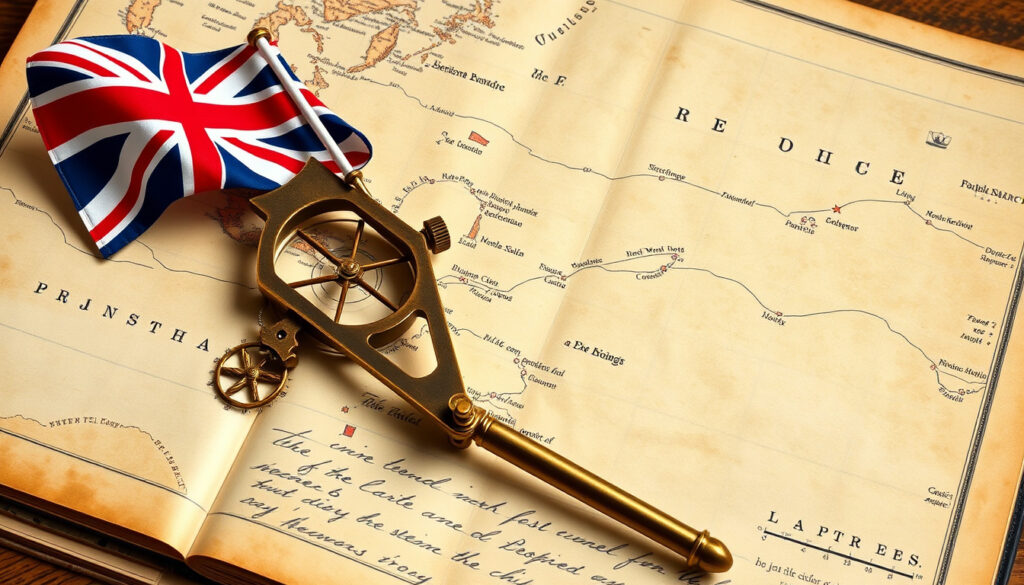
Captain Cook: Voyages, Legacy, and the Truth About His Descendants
Every family history has its dead ends, but few are as literal as the line of Captain James Cook. It is a curious thing to trace a name through history only to find that it stops abruptly—a genealogical cliff edge that still surprises people today. If you have ever wondered what happened to the families of history’s great explorers, Cook’s story offers a particularly definitive conclusion.
Here is what is known about his marriage, his children, and the reason that a question about living descendants gets a clear, final answer.
Born: 1728 | Died: 1779 | Voyages: 3 | Marriage: 1762 | Children: 6 (all deceased) | Direct descendants: None
Before examining the fate of his family line, it helps to have the key details of his life in one place.
| Label | Value |
|---|---|
| Full Name | Captain James Cook |
| Nationality | British |
| Known for | Mapping the Pacific, discovering eastern Australia |
| Spouse | Elizabeth Batts |
| Children | 6, all deceased |
| Voyages | 3 |
Confirmed facts
- Married Elizabeth Batts in 1762 (Britannica)
- Elizabeth outlived her husband and all her children
- All died young, none had children
- No direct descendants alive today
- Legacy lives on in charts and place names
- Bloodline ended with his generation
- No direct descendants exist today
- Legacy is a map, not a family name
Early Life and Background
James Cook was born on 7 November 1728 in Marton-in-Cleveland, Yorkshire, England. He was the second of eight children of a Scottish farm labourer and his English wife.
His father’s employer noticed the young Cook’s intelligence and paid for his early schooling. By age 18, Cook had moved to the coast and become apprenticed to a Whitby shipping firm, beginning a career at sea that would eventually transform the map of the Pacific.
Cook was not born to privilege or to a seafaring dynasty; his rise came through skill, discipline, and an extraordinary capacity for accurate observation.
Marriage and Children
The question of whether any descendants exist is settled by records, not by missing branches on a family tree. James Cook married Elizabeth Batts in 1762 (Britannica). The couple had six children between 1763 and 1779.
Their children—James, Nathaniel, Elizabeth, Joseph, George, and Hugh—all died young. Some died in infancy, others in their teens and twenties. None survived to adulthood or had children of their own.
Elizabeth Batts never remarried after Cook’s death. She lived until 1835, outliving her husband and every one of her children.
This is the core reason that the family line ends with Cook’s generation. There are no direct descendants alive today.
First Voyage (1768–1771): Mapping the Unknown
Cook’s first Pacific voyage ran from 1768 to 1771 (Britannica). The voyage’s primary mission was scientific—to observe the transit of Venus from Tahiti—but its lasting result was the charting of New Zealand and the eastern coast of Australia.
Cook became the first European to chart the eastern coastline of Australia, a claim confirmed by the timelines established in the records of his exploration. His maps were so accurate that some remained in use well into the 20th century.
This was the voyage that made him a national figure, yet it is only part of the reason he is ranked among the most significant explorers of the era.
Second Voyage (1772–1775): Dispelling the Southern Continent
Cook’s second Pacific voyage, which ran from 1772 to 1775 (Britannica), quashed the idea of a southern continent. He circumnavigated the globe at high latitudes, crossing the Antarctic Circle for the first time in history.
His crew included a young man named William Bligh, who would later command the HMS Bounty. The voyage also tested his innovative use of fresh food, proving that scurvy could be largely prevented—a major advance in maritime medicine.
The absence of a large southern landmass meant that Cook had effectively closed a major geographical debate, and his reports helped redraw the map of the world’s oceans.
Third Voyage and Death in Hawaii (1776–1779)
Cook’s third and final voyage began in 1776 with the primary goal of finding a northern sea route between the Pacific and Atlantic Oceans. It became his last.
Cook’s death in Hawaii in 1779 is one of the most famous episodes in Pacific history, but it was not a random act of violence. The circumstances involved a complex clash of cultural expectations, resource pressures, and a stolen boat. His remains were recovered by his crew and buried at sea.
By the end of the third voyage, his contribution to mapping the Pacific was unprecedented—there was little of consequence left to discover.
Are there any descendants of Captain Cook still alive today?
No. There are no direct descendants of Captain James Cook alive today. Cook married Elizabeth Batts in 1762 (Britannica), and the couple had six children, as confirmed by the records.
The family’s story does not end with a shadow or a gap; His wife Elizabeth survived him and their children, living on for many years. That is a sharp contrast to the explorer’s own legacy, which continues through his charts and the places that bear his name.
What happened to Captain Cook’s children?
The Cook family’s story is one of a line that ended in a few short decades. James Cook’s six children with Elizabeth Batts all died young, some in infancy, others in their teens and twenties (Britannica summary).
His sons did not live long enough to marry or have children, ending the Cook name at the source. While the direct line is gone, Cook’s influence on navigation, cartography, and the British Empire’s reach places him at a specific historical moment—one where a ship’s captain could shape global understanding of geography.
His legacy is a map, not a family name. The cost of such an extraordinary career, spent almost entirely at sea, may have contributed to the very absence of a continuing lineage.
Did Captain Cook marry?
Yes, James Cook married Elizabeth Batts on 21 December 1762 at St. Margaret’s Church in Barking, Essex. The marriage was a lasting one, though Cook spent most of it at sea.
Elizabeth Batts was the daughter of a ship’s master and held the family together while Cook was away on his long voyages. She never remarried after his death and remained a widow for 56 years.
What was Captain Cook most famous for?
He is best known for his three Pacific voyages. He was the first European to map the eastern coast of Australia and to chart New Zealand in detail.
He was killed in Hawaii in 1779 during a confrontation at Kealakekua Bay. His voyages fundamentally changed European understanding of the Pacific region.
Did Captain Cook discover Australia?
The question of whether Cook “discovered” Australia is one of perspective. Aboriginal Australians had lived there for over 50,000 years before he arrived. Cook was, however, the first European to chart the eastern coastline of Australia in 1770, which led directly to British colonization.
The Dutch had sighted the northern and western coasts earlier in the 17th century. Cook’s achievement was not first sighting, but accurate charting of the eastern coast, which he claimed for Britain.
Did Cook discover New Zealand?
No, the Māori people had discovered and settled New Zealand centuries before. Cook was the second European to reach the islands, after Abel Tasman in 1642, but he was the first to chart the complete coastline in 1769-1770.
His maps were so accurate that they were used for navigation well into the 19th century.
What did Captain James Cook call Australia?
Cook did not settle on a new name for the continent; he charted the eastern coast under the name “New South Wales,” which he claimed for Britain. That name was used for the eastern portion of the continent during the early colonial period. The name “Australia” came later.
What was Australia called before it was called Australia?
Before European settlement, the many Aboriginal peoples had their own names for the land, such as “Terra Australis” used by Europeans and various Indigenous language names. The continent was known as “New Holland” by the Dutch, a name that remained in use by Europeans for much of the 17th and 18th centuries.
The name “Australia” was popularized by Matthew Flinders in the early 19th century.
What did Captain Cook do to Hawaiians?
Cook’s arrival in Hawaii in 1778-79 was initially met with ceremonial welcome, possibly as the god Lono. However, tensions escalated during his second return to Hawaii.
European and American accounts, primarily from his own crew, blame Cook for attempting to take a local chief hostage to recover a stolen boat, leading to a confrontation that resulted in his death. These accounts, such as the journals of James King, must be viewed critically, as they are the perspective of the crew involved, while the Hawaiian side of the story was passed down orally and is often absent from the history books.
Was Captain Cook eaten?
No. The rumor that Captain Cook was eaten is a myth that emerged from journalistic speculation and popular misconceptions about cannibalism.
Cook’s body was treated with respect by the Hawaiians, who performed funerary rites before returning parts of his remains to his crew.
Captain Cook death
The captain’s death occurred on 14 February 1779 in Kealakekua Bay, where he was killed during a confrontation that spiraled into violence when he attempted to detain a chief.
His remains were buried at sea, and a monument now stands at the site of his death.
What was Captain Cook’s rank at his death?
Cook held the rank of Captain in the Royal Navy at the time of his death, though he had previously been promoted to that rank for his mapping achievements.
His rank was a testament to his service, and he was afforded the posthumous honor of a position as a fellow of the Royal Society.
What ship did Captain Cook command on his first voyage?
Cook commanded the HMS Endeavour, a converted collier, on his first voyage (1768–1771). The ship was a sturdy vessel that sailed around the globe.
Related reading: Mollie Sugden: Life, Wigs, Porsche, and Legacy of Mrs. Slocombe
rmg.co.uk, rmg.co.uk, timelinesandsoundtracks.blogspot.com, en.wikipedia.org, en.wikipedia.org, nma.gov.au, pib.anu.edu.au, bbc.co.uk, blog.geogarage.com, nationalarchives.gov.uk, anbg.gov.au
FAQ
Are there any descendants of Captain Cook still alive today?
No. There are no direct descendants of Captain James Cook alive today. All six of Cook’s children died young, and none had children of their own, ending the direct line.
How many children did Captain Cook have?
James Cook and his wife Elizabeth Batts had six children between 1763 and 1779.
What happened to Captain Cook’s children?
All six died young, and none survived to have children. His sons did not live long enough to marry.
Did Captain Cook’s wife remarry after his death?
No, Elizabeth Batts never remarried. She lived until 1835.
Did Captain Cook have any siblings who had children?
Yes, but those would be collateral relatives, not direct descendants with the Cook surname.
Where is Captain Cook buried?
He was buried at sea during his final voyage, but his wife is buried in Cambridge, England, with several of their children.
Related search: Captain Cook family
More related posts
 And Just Like That Season 3 – Episode Guide Release and Where to Watch
 Newspaper – Origins, Types and Evolution
 German Tax Break Working Pensioners – Earn €2,000 Monthly Tax-Free
 TV Shows with Millie Gibson: Full Filmography & Career Guide
 Sarah J Maas Books in Order: Guide to ACOTAR, Throne of Glass
 Type in a Phone Number and Find Out Who It Is: Free Lookup Guide
 Private Dentist Near Me: Costs, Rules & Affordability
 Smartlynx Airlines Closes Down – Key Facts on the Shutdown