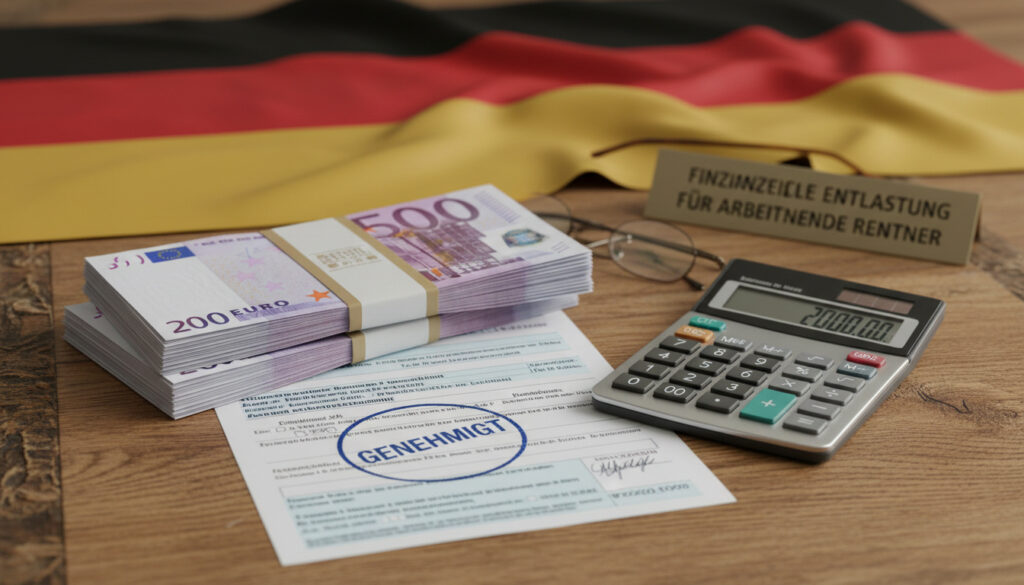
German Tax Break Working Pensioners – Earn €2,000 Monthly Tax-Free
Germany faces mounting pressure from labor shortages and an aging population. In response, Berlin has approved a significant tax incentive designed to keep skilled workers in employment beyond statutory retirement age. The new policy, known as the “active pension” or Aktivrente, will allow pensioners to earn substantial employment income without incurring income tax liabilities.
Starting January 1, 2026, eligible retirees can earn up to €2,000 per month tax-free from voluntary work. The measure targets sectors struggling with workforce gaps, including engineering, healthcare, and public administration. Unlike previous restrictions that prevented retirees from returning to former employers, the new rules remove such barriers entirely.
The legislation represents a shift in Germany’s approach to senior employment, prioritizing retention of experienced workers over strict retirement enforcement. It forms part of broader economic reforms aimed at countering demographic decline while boosting social insurance contributions.
What is the German tax break for working pensioners?
€2,000 monthly tax-free earnings
Employees beyond statutory retirement age
October 2025
January 1, 2026
- The Aktivrente permits income tax exemption on earnings up to €2,000 per month
- Applies exclusively to employees subject to social insurance contributions
- Self-employed individuals, freelancers, and civil servants remain excluded from the scheme
- Health and long-term care insurance contributions continue to apply to all earnings
- Previous prohibitions on returning to work for former employers have been lifted
- Legislation specifically targets skilled labor shortages in critical sectors
- Available to those already drawing pensions or deferring benefit claims
| Fact | Details |
|---|---|
| Policy Name | Aktivrente (Active Pension) |
| Tax-Free Threshold | €2,000 per month |
| Effective From | January 1, 2026 |
| Retirement Age | 65-67 (rising to 67 by 2031) |
| Coverage | Employees with social insurance |
| Excluded Categories | Self-employed, freelancers, farmers, foresters, mini-job workers, civil servants |
| Insurance Status | Health and long-term care contributions mandatory |
| Former Employer Rule | Ban on returning to previous employers removed |
How much can working pensioners earn tax-free in Germany?
The Monthly Exemption Threshold
The Aktivrente establishes a clear monthly limit of €2,000 in tax-free earnings for working pensioners. This amount applies to gross income from employment and represents a complete exemption from income tax liabilities on earnings within this threshold. Any income generated beyond this cap becomes subject to standard German income tax rates.
Calculating Taxable Income
Pensioners earning €2,500 monthly, for example, would pay income tax only on the €500 excess. The first €2,000 remains shielded from taxation entirely. This structure creates a marginal tax advantage for part-time work or reduced-hour arrangements, making phased retirement financially viable for many skilled professionals.
Pensioners can maximize take-home pay by structuring work to remain at or below the €2,000 monthly threshold, though health insurance contributions apply to the full amount.
Previous Restrictions
Before this legislation, retirees faced significant barriers when seeking post-retirement employment. Regulations specifically prohibited returning to work for former employers, limiting options to new companies or sectors. The Aktivrente removes these constraints, enabling part-time or reduced-hour arrangements with previous employers. Euronews reports that this change specifically addresses retention in engineering, transport, and healthcare sectors.
What are the social security contributions for working pensioners in Germany 2025?
Mandatory Insurance Payments
While the Aktivrente provides income tax relief, it does not exempt working pensioners from social security obligations. According to the German government, health insurance and long-term care insurance contributions remain mandatory on all employment earnings, including amounts below the €2,000 tax-free threshold.
Pension Insurance Implications
The interaction between new earnings and existing pension benefits depends on whether the individual has claimed their pension or deferred it. Those deferring benefits may see adjusted calculations, while existing pensioners must continue paying health contributions on employment income. GPA analysis indicates these contributions help stabilize the social insurance system while allowing labor force participation.
The tax break takes effect January 1, 2026. Throughout 2025, standard taxation rules apply to working pensioners without the €2,000 exemption.
Does Germany tax foreign pensions for working pensioners?
UK and Foreign Pension Treatment
The Aktivrente specifically addresses German employment income, not foreign pension payments. However, foreign pensioners working in Germany face complex tax treatment depending on bilateral agreements. UK government guidance notes that tax liabilities depend on residency status and specific treaty provisions between Germany and the pension source country.
Social Security Coordination
For individuals receiving UK state pensions or private pension income while working in Germany, standard rules likely apply to new earnings. Social security contributions would be due on German employment income, while foreign pension income may fall under different regulations based on applicable international agreements. German tax authority resources indicate that foreign pensions may have taxable portions depending on residency and treaty terms.
Official sources have not specified how the €2,000 tax-free allowance interacts with foreign pension income or whether bilateral agreements affect eligibility for working pensioners receiving overseas benefits.
What were the previous tax breaks for working pensioners in Germany?
Prior to the Aktivrente legislation, Germany maintained strict limitations on post-retirement employment. No equivalent tax-free earning allowance existed for pensioners in 2021 or 2022. Historical records indicate that previous rules focused primarily on retirement age adjustments and pension supplements rather than employment incentives.
The most significant barrier removed by the 2026 reforms was the prohibition against returning to work for former employers. This restriction had effectively forced retirees seeking additional income to find entirely new positions or change sectors. The new policy represents a structural shift from discouraging post-retirement work to actively incentivizing it through tax relief.
For those seeking employment opportunities, resources like Indeed Jobs Near Me may provide local listings, though specific eligibility for the German tax break requires meeting statutory retirement age and employment criteria.
When does the German tax break for working pensioners take effect?
- Pre-2026: Restrictions prevent pensioners from returning to work for former employers; no tax-free earning allowances exist for working retirees.
- September-October 2025: German government announces the Aktivrente legislation, with coverage from Euronews and other outlets detailing the €2,000 monthly exemption.
- January 1, 2026: Aktivrente takes effect, allowing tax-free earnings up to €2,000 monthly for eligible working pensioners.
- By 2031: Statutory retirement age reaches 67 fully, affecting eligibility calculations for future retirees under the scheme.
What is confirmed and what remains unclear about the German pension tax break?
| Established Facts | Uncertain Details |
|---|---|
| €2,000 monthly income tax exemption effective January 1, 2026 | Interaction with solidarity surcharges on excess earnings |
| Applies to employees subject to social insurance | Municipal tax treatment of exempt income |
| Health and long-term care contributions remain mandatory | Whether the allowance applies per person or per employment contract |
| Excludes self-employed, freelancers, and civil servants | Full alignment details with pension and health insurance systems |
| Ban on returning to former employers removed | Specific calculator tools from Bundesfinanzministerium |
Why is Germany introducing tax breaks for working pensioners?
Demographic shifts have created acute labor shortages across German industry. The Aktivrente forms part of a broader strategy to retain skilled workers who might otherwise exit the workforce entirely. Government statements emphasize countering demographic change while boosting economic output through increased participation.
The policy aligns with concurrent reforms tightening Bürgergeld (basic income) requirements to encourage workforce participation across all age groups. By comparison with EU peers, Germany’s approach is more explicit than Sweden’s senior earned-income allowance or Denmark’s deferred pension bonuses, offering a clear numerical threshold rather than complex calculation formulas. The policy aligns with concurrent reforms tightening Bürgergeld (basic income) requirements to encourage workforce participation across all age groups, and for those interested in working in Germany, Скільки можна працювати в Німеччині provides more details.
Sectors such as engineering, transport, healthcare, and public administration face particular pressure from retiring baby boomers. The tax incentive specifically targets these areas, allowing organizations to retain institutional knowledge while transitioning to younger workforces gradually.
What are the official sources for the German working pensioner tax policy?
Germans who choose to work beyond retirement age will be able to earn up to €2,000 a month tax-free.
Financial Times, October 2025
Pensioners… tax breaks of up to 45pc.
The Telegraph, September 2025
Primary documentation includes the official German government announcement of the bill and legal analysis from Vital Law regarding implementation details.
What are the key points about Germany’s tax break for working pensioners?
Germany’s Aktivrente introduces a €2,000 monthly tax-free earnings allowance for pensioners working beyond statutory retirement age, effective January 1, 2026. The measure applies to employees paying social insurance contributions while excluding self-employed individuals and civil servants. While income tax exemptions provide significant savings, health and long-term care insurance obligations continue unchanged. The policy removes previous barriers to returning to former employers and targets critical sectors facing labor shortages. Those receiving foreign pensions should verify specific treaty provisions, while all workers should monitor implementation details scheduled for clarification through official channels like UK Pensioners PIP Backdated Payments 2025 for comparative context on pension administration changes.
Frequently Asked Questions
Can self-employed pensioners claim the German tax break?
No. The Aktivrente explicitly excludes self-employed individuals, freelancers, farmers, foresters, and civil servants. Only employees subject to social insurance contributions qualify.
Does the €2,000 allowance apply per job or per person?
Official sources have not clarified whether the tax-free threshold applies per employment contract or as a total personal allowance across multiple jobs. This detail remains pending regulatory guidance.
Are solidarity surcharges exempt under the new rules?
The interaction between the €2,000 tax-free earnings and solidarity surcharges remains unspecified in current documentation. Clarification from tax authorities is expected before the January 2026 implementation.
How does Germany’s policy compare to other EU countries?
Germany’s €2,000 monthly exemption is more explicit than Sweden’s senior earned-income allowance or Denmark’s deferred pension bonuses, providing a clear threshold rather than complex formulas.
What sectors benefit most from the Aktivrente?
The legislation specifically targets engineering, transport, healthcare, and public administration sectors experiencing acute skilled labor shortages due to demographic shifts.
Do pensioners pay health insurance on tax-free earnings?
Yes. Health and long-term care insurance contributions remain mandatory on all employment earnings, including amounts within the €2,000 tax-free threshold for income tax purposes.
Can pensioners return to previous employers under the new rules?
Yes. The Aktivrente removes the previous prohibition on returning to work for former employers, allowing part-time or reduced-hour arrangements with previous companies.
More related posts
 All for One Gift Card: Balance, Use & Redeem Guide
 Why You Must Increase Mounjaro Dose: Schedule Guide
 Type in a Phone Number and Find Out Who It Is: Free Lookup Guide
 Ellie Costello: Partner, Career and GB News Facts
 GE Vernova Share Price: Live GEV Stock Quote, Chart & News
 Santander Online Business Banking: Login UK Guide & Features
 Chanel Allure Homme Sport: Scent Profile, Popularity & Dupes
 Telecom Plu Share Price (TEP): Late t New & Analy i