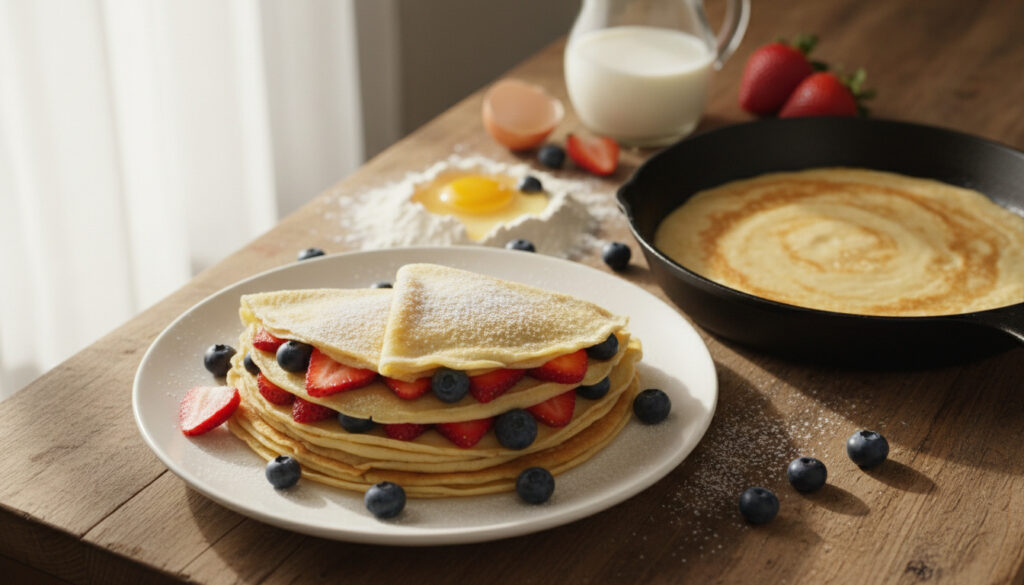
How to Make Crepes – Easy Recipe and Pro Tips
Making crepes at home requires little more than a handful of pantry staples and the right technique. These thin, versatile French pancakes serve as the foundation for both elaborate brunches and simple weeknight desserts.
Unlike their thicker American counterparts, crepes rely on a liquid batter and rapid cooking to achieve their characteristic delicate texture. Mastering the swirl and flip takes practice, but the fundamental recipe remains accessible to beginners.
This guide covers the essential batter preparation, proper equipment selection, and cooking methods that produce consistent results. Whether you prefer sweet fillings with fresh fruit or savory combinations with eggs and vegetables, the techniques remain the same.
How to Make the Perfect Crepe Batter
10 mins + rest
1-2 mins per crepe
12 crepes
Beginner
- Rest batter at least 30 minutes for tenderness, though 4 hours yields superior results
- Use all-purpose flour specifically for structure without rubbery texture
- Whole milk creates richer flavor and more tender crepes than skim alternatives
- Blender incorporation produces smoother batter than hand-whisking alone
- Add sugar and vanilla only for dessert applications; omit for savory versions
- Chill the mixture to allow full flour hydration before cooking
- Maintain room temperature eggs to prevent butter solidification in batter
| Component | Specification | Function |
|---|---|---|
| Flour | 1 cup all-purpose | Provides structure without toughness |
| Eggs | 2-3 large | Binds ingredients and adds richness |
| Milk | ½-¾ cup whole | Creates tender texture and flavor |
| Water | ½ cup | Thins batter for delicacy |
| Butter | 1-2 tablespoons melted | Prevents sticking and adds flavor |
| Rest Period | 1-4 hours chilled | Allows gluten relaxation and hydration |
| Sweet Option | 1 tablespoon sugar + vanilla | Flavor enhancement for dessert crepes |
| Savory Base | Salt only | Neutral foundation for savory fillings |
Batter starts with eggs, flour, milk, water, and melted butter. Most standard recipes call for two to three large eggs combined with one cup of all-purpose flour, according to Preppy Kitchen. The protein content in all-purpose flour provides enough structure to hold the crepe together without developing the toughness associated with bread flour.
Liquid ratios determine the final texture. Whole milk contributes richness, while the addition of water thins the mixture sufficiently to create the characteristic lace-thin pancake. For sweet applications, incorporate one tablespoon of sugar and vanilla extract; omit these additions when preparing savory versions.
Resting the batter proves essential. Chill the mixture for at least one hour, though four hours or overnight yields superior results. This resting period, confirmed by I Heart Naptime, allows flour to fully hydrate and enables gluten strands to relax, producing more tender crepes that resist tearing during cooking. Sally’s Baking Addiction recommends using a blender for 15-30 seconds to achieve the smoothest incorporation of flour into wet ingredients.
Best Pan and Tools for Cooking Crepes
Specialized equipment helps but isn’t strictly necessary. An eight to ten-inch nonstick skillet works perfectly well, though dedicated crepe pans with their shallow sides facilitate easier flipping. Sources at Kim’s Cravings confirm that either option succeeds over medium or medium-low heat.
Temperature control matters more than the specific pan style. Test readiness by flicking water droplets onto the surface—proper heat produces an immediate sizzle and dancing motion. Too cold, and the batter sticks; too hot, and the exterior burns before the interior sets.
If water sizzles and evaporates within two seconds, the pan has reached optimal temperature. If the water sits without sound, continue heating for another minute before adding batter.
Step-by-Step Guide to Cooking Crepes
The Pour and Spread Technique
Pour three to four tablespoons of batter into the center of the preheated pan. Immediately tilt and rotate the pan with your wrist, spreading the liquid into a thin, even circle that reaches the edges. According to Just One Cookbook, rotating the pan steeply allows the batter to flow from center to rim before settling into a uniform layer.
Small holes indicate insufficient spreading. Shake the pan vigorously side to side while the batter remains liquid to fill these gaps. This motion must happen quickly before the proteins begin to set.
Timing the Flip
The first side requires one to two minutes of cooking until the bottom turns lightly golden and the surface appears dry. Slide a long cooking chopstick, thin metal spatula, or offset spatula under all edges to loosen the crepe from the pan surface.
Raise the chopstick in the center and flip using a quick wrist motion. The second side needs only fifteen to twenty seconds to achieve light browning. Transfer to a plate with the cooked (bottom) side facing down for optimal presentation.
If a crepe burns and sticks in one specific spot, stop immediately and wash the pan thoroughly. Residual burned particles cause subsequent crepes to tear upon contact. Always remove crumbs between batches to maintain a clean cooking surface.
Maintaining Consistent Results
Lightly brush the pan with melted butter or neutral oil before each crepe to prevent adhesion. Maintain consistent medium heat throughout the cooking process. Just One Cookbook emphasizes that proper preheating prevents the sticking that plagues inexperienced cooks.
Troubleshooting Common Crepe Problems and Filling Ideas
Rubberiness usually stems from overcooking or using high-protein flour. Limit cooking to one to two minutes per side and stick with all-purpose flour rather than bread flour, advises Preppy Kitchen. Thick crepes result from insufficient batter spreading—swirl immediately after pouring to create the thin layer essential to proper texture.
Sticking indicates either inadequate fat or improper temperature. Brush the pan lightly with melted butter or neutral oil before each crepe, and maintain consistent medium heat. Remove any debris between crepes to prevent tearing during the flipping process.
Stack finished crepes on a plate and cover with a clean kitchen towel. This method keeps them warm and pliable while cooking the remaining batter, allowing efficient preparation for groups without individual reheating.
Sweet fillings range from Nutella with fresh banana slices to homemade whipped cream sweetened with powdered sugar and vanilla until stiff peaks form. Fresh berries, caramel sauce with cinnamon apples, or maple syrup offer traditional finishes.
Savory options include smoked salmon with cream cheese and capers, scrambled eggs with sautéed spinach and mushrooms, or pesto chicken with roasted peppers. Turkey, bacon, tomato, and avocado combinations provide substantial meal options. BBC Good Food notes that buckwheat flour variations create the classic French galette suitable for savory applications.
How Long Does the Entire Crepe Process Take?
- Blend or whisk ingredients until completely smooth with no visible lumps.
- Minimum resting period for adequate flour hydration and gluten relaxation.
- Standard chilling duration that produces noticeably improved texture.
- Overnight rest period yielding optimal tenderness and flexibility.
- Active cooking time required to prepare one dozen crepes sequentially.
- Maximum safe refrigerator storage duration for cooked crepes in airtight containers.
- Maximum freezer storage duration when wrapped individually to prevent freezer burn.
What Differentiates Crepes from Pancakes?
| Established Characteristics | Remaining Variations |
|---|---|
| Batter contains no chemical leavening agents (baking powder or soda) | Exact thickness preferences vary by regional style and personal taste |
| Liquid-to-flour ratio emphasizes thin, pourable consistency | Specific flip timing depends on individual stove heat output and pan material |
| Cooked briefly on second side (15-20 seconds) versus first side (1-2 minutes) | Precise scientific measurement of gluten development during resting periods |
| Traditionally served wrapped around fillings rather than stacked | Complete historical documentation of origin in Brittany region |
| Utilize all-purpose flour specifically to avoid rubbery texture | Standardization of “medium heat” across different stove types and BTU outputs |
The Role of Crepes in Modern Cooking
These thin pancakes originated in the Brittany region of France, where traditional preparations used buckwheat flour for savory galettes and wheat flour for sweet versions. The technique spread globally, adapting to local ingredients while maintaining the essential thin, flexible structure that distinguishes them from other flatbreads.
Unlike What Does SOS Mean – Morse Code Distress Signal Explained, which requires understanding specific historical maritime context, crepe preparation depends entirely on physical technique and precise ingredient ratios. The versatility allows service at any meal, from breakfast wraps to elegant dinner presentations.
Modern adaptations include gluten-free variations using alternative flours, though these require adjustment to liquid ratios to maintain the characteristic thin structure. Vegan versions substitute eggs with chickpea flour or commercial replacers, though the texture differs from traditional preparations.
Expert Guidance on Crepe Technique
Resting develops gluten for tender crepes
— Julia Child, French culinary authority
Use a blender for the smoothest results, which quickly incorporates flour into wet ingredients
— Sally’s Baking Addiction
If small holes appear, shake the pan vigorously side to side while the batter is still runny to fill them
— Just One Cookbook
Key Takeaways for Perfect Crepes
Success requires a thin, rested batter cooked in a properly heated nonstick pan. The one-to-two-minute cooking window on the first side provides the golden color and dry surface necessary for clean flipping. Whether filled with fresh berries and cream or eggs and ham, the fundamental technique remains consistent. For those interested in biological transformation processes, What Happens When You Die – Biological Stages and Timelines explores systematic changes of a different nature entirely.
Common Questions About Crepe Making
How thin should crepe batter be?
The consistency resembles heavy cream. If the batter coats a spoon but drips off immediately, it has reached proper thinness. Add milk one tablespoon at a time if the mixture seems too thick.
Why are my crepes sticking to the pan?
Insufficient preheating or inadequate fat causes sticking. Ensure the pan reaches medium heat and brush with melted butter before each crepe. Remove any burned crumbs immediately.
Can I make crepe batter the night before?
Yes, refrigerate covered batter overnight. Stir gently before using, as slight separation may occur. The extended rest actually improves texture.
Do I need a special crepe pan?
No. Any 8-10 inch nonstick skillet works effectively. Crepe pans offer ergonomic advantages but do not affect the final taste or texture.
How do I prevent rubbery crepes?
Use all-purpose flour rather than bread flour, and avoid overcooking. Limit each side to 1-2 minutes maximum, and ensure the batter has rested adequately.
What is the best way to store leftover crepes?
Stack cooled crepes with parchment paper between layers. Refrigerate up to two days or freeze up to one month. Reheat gently in a dry pan or microwave.
Can I use gluten-free flour for crepes?
Yes, though results vary by blend type. Gluten-free batters often require additional liquid and rest time to achieve proper consistency without wheat-based structure.
More related posts
 The Bad Guys 2: Release Date, Netflix, Age Rating & Cast
 Evri Track a Parcel: How to Track Your Evri Parcel
 Tyrese Haliburton: Shingles, Achilles Injury, and Family
 Kim Yo-jong – Kim Jong-un’s Sister and Key Political Figure
 All-on-4 Dental Implants – Procedure Costs Success Rates
 Trevor Noah: Wife, Kids, ADHD, and Personal Life
 What Is a Hypothesis? Definition, Examples & Types
 Canker Sore on Tongue: Causes, Treatments, and Healing Time