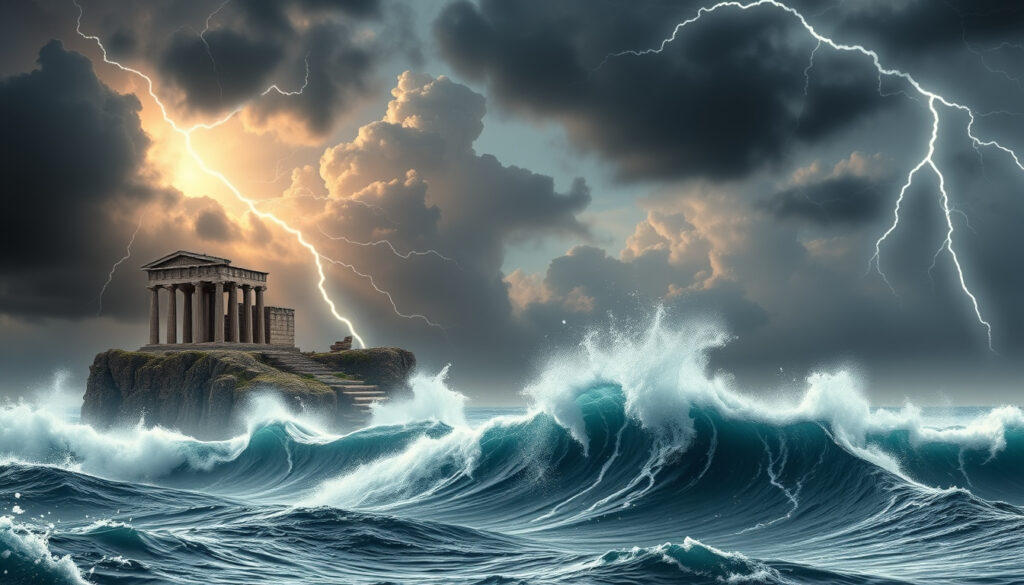
Clash of the Titans: Movies Order, Worth Watching & More
Few mythological stories have been retold as many times as Perseus versus the gods—yet the Clash of the Titans franchise keeps pulling viewers back. Whether you remember the stop-motion charm of the 1981 original or caught the 2010 remake in 3D, the question of where to start (and whether to bother with the sequel at all) comes up again and again. This guide cuts through the confusion with a clear watch order, honest reviews, and the real reason there never was a third film.
Movies in Series: 3 · 2010 Remake Director: Louis Leterrier · Lead Actor 2010: Sam Worthington · Rotten Tomatoes 2010: 27% · Runtime 2010: 1h 46m
Quick snapshot
- Three films total: 1981 original, 2010 remake, 2012 sequel Wrath of the Titans (Fiction Horizon)
- Sam Worthington stars as Perseus in the 2010 and 2012 films (Fat Guys at the Movies)
- Directors verified: Desmond Davis (1981), Louis Leterrier (2010), Jonathan Liebesman (2012) (LibraryThing catalog)
- No official announcements about a Clash of the Titans 3 (Fiction Horizon)
- Streaming rights and platform rotations change over time (Fiction Horizon)
- Whether any franchise revival is actively in development (Fiction Horizon)
- 1981 original → 2010 remake → 2012 Wrath of the Titans
- The 2010 and 2012 films share continuity; the 1981 film does not
- No sequel released after 2012
- No third film has been confirmed as of the latest available information
- The franchise remains dormant, likely due to box office performance of the 2012 sequel
The table below consolidates essential franchise details for quick reference.
| Fact | Detail |
|---|---|
| Franchise Start | 1981 |
| Remake Year | 2010 |
| Total Films | 3 |
| Streaming | Netflix, Apple TV |
| 1981 Director | Desmond Davis |
| 2010 Director | Louis Leterrier |
| 2012 Director | Jonathan Liebesman |
| 2010 Lead Actor | Sam Worthington |
| Wrath of the Titans Rating | PG-13 |
What is the order of the Titans movies?
The franchise spans three decades with two distinct storylines. The 1981 original Clash of the Titans stands alone—it launched the franchise but was never followed by sequels. The 2010 remake rebooted the story and was then extended with Wrath of the Titans in 2012 (Fiction Horizon).
1981 original
Directed by Desmond Davis, the 1981 film introduced audiences to stop-motion creature effects by Ray Harryhausen and a classic take on the Perseus myth. It remains a cult favorite for its practical effects, which still hold up decades later.
- Release: 1981
- Director: Desmond Davis
- Notable for: Ray Harryhausen’s stop-motion animation
2010 remake
The 2010 reboot updated the story with modern visual effects and a 3D release. Sam Worthington took on the role of Perseus, with Liam Neeson as Zeus and Ralph Fiennes as Hades. It follows a similar plot to the original but expands the action sequences (Fat Guys at the Movies).
- Release: 2010
- Director: Louis Leterrier
- Lead: Sam Worthington as Perseus
Wrath of the Titans
Released March 30, 2012, Wrath of the Titans picks up ten years after the 2010 events. Perseus returns to battle Kronos as the gods weaken from declining worship. Sam Worthington, Liam Neeson, and Ralph Fiennes all reprised their roles (Christian Spotlight on the Movies).
- Release: March 30, 2012
- Director: Jonathan Liebesman
- Runtime: 99 minutes
The pattern across the franchise is straightforward: the original told one complete story, while the remake launched a separate continuity that the sequel extends. Viewers can start with either, but the two storylines never intersect.
Is there Clash of the Titans part 2?
Yes—technically there are two sequels depending on how you count. Wrath of the Titans (2012) serves as the direct sequel to the 2010 remake. The 1981 original, however, never received an official sequel despite its popularity (Fiction Horizon).
Wrath of the Titans details
The 2012 sequel expanded the mythology with new threats. Kronos—the original Titan imprisoned in Greek mythology—breaks free, forcing Perseus to team up with the son of Poseidon to save Zeus and prevent the gods’ downfall. Jonathan Liebesman directed, with the film receiving a PG-13 rating from the MPAA (Flixist review).
The implication: Wrath of the Titans exists as a direct continuation of the 2010 story. If you only watch one film, either works independently—but the sequel assumes you’ve seen the remake first.
Is Clash of the Titans 2010 worth watching?
The answer depends heavily on what you’re after. If you want polished storytelling and tight pacing, look elsewhere. If you’re after visual spectacle, Greek mythology brought to life with modern effects, and fast-paced action, the 2010 film delivers on those terms.
Critical reception
Reviews were largely negative. The film holds a 27% score on Rotten Tomatoes based on critic reviews, with complaints about a muddled plot, slow pacing, and a 3D conversion that reviewers called “rushed” and “poor” (Karwansaray Publishers blog). However, several reviewers acknowledged the film was “fun” despite its flaws (Fat Guys at the Movies).
“The remake wasn’t perfect, but it was fun.”
Fat Guys at the Movies (movie review site)
“Wrath of the Titans isn’t quite ‘good’, but it delivers most of what it promises and generally justifies its existence as silly big-scale B-movie fun.”
Scott Alan Mendelson (film critic)
Audience scores
Audience reactions were more forgiving than critics. Viewers drawn to Greek mythology and blockbuster spectacle found enough to enjoy, even if the story left gaps. The film’s best moments come from the creature designs and set pieces rather than character development.
The trade-off: the 2010 Clash of the Titans offers visual spectacle with middling storytelling. If effects-driven action is what you seek, it earns its runtime. If narrative coherence matters most to you, wait for streaming or skip it entirely.
Is Clash of the Titans ok for kids?
Family suitability depends on which film you’re considering. The 1981 original is the gentler choice, while the 2010 and 2012 entries require more parental judgment.
Age rating
The 1981 original carries a PG rating with minimal content concerns—mostly mythological violence that reads as cartoonish by today’s standards. Wrath of the Titans earned a PG-13 rating, placing it in a different category entirely. The 2010 remake has no official MPAA rating listed in available sources, but its content—monsters, battles, and brief suggestive moments—suggests it’s most suitable for pre-teens and up.
Content warnings
Parents should note the following across the franchise:
- 1981: Stop-motion creature violence; minimal blood; mythological battles
- 2010: More intense creature designs; sequences of peril; fantasy violence
- 2012: Elevated action intensity consistent with PG-13 rating; battle scenes with more graphic violence
Common Sense Media’s family guide suggests the 1981 original works for most children watching with parents, while the 2010 and 2012 entries call for more caution depending on the child’s age and sensitivity to action (Christian Spotlight on the Movies).
The pattern: the older the film, the milder the content. Families with young children should start with the 1981 original and judge the later films individually based on their child’s maturity level.
For families with children under 10, the 1981 original is the safest entry point—mythological but gentle. Parents can preview the 2010 and 2012 films on streaming before committing, as content intensity escalates across the franchise.
Why no Clash of the Titans 3?
No third film materialized, and the most likely explanation is financial performance. The franchise began as a British-American production based on Greek mythology, but after Wrath of the Titans underperformed expectations, Warner Bros. moved on to other properties (Warner Bros. Entertainment Wiki).
Box office performance
Both the 2010 remake and the 2012 sequel earned modest returns relative to their budgets. While exact figures vary by source, the broader pattern is clear: neither film justified the production and marketing costs required for a third installment. Studios prioritize franchises with proven box office strength, and the Clash of the Titans series never reached that threshold.
Sequel status
No official announcements regarding a third film exist in available public records. The franchise wiki lists video games and soundtracks among its extensions, but no active development for a sequel appears in verified sources (Wikipedia franchise category).
What this means: the trilogy is effectively closed. Without a major studio commitment and a fresh creative direction, a Clash of the Titans 3 remains unlikely unless the studio decides to revive the property years down the line with new leadership.
Upsides
- Three films offer variety: classic stop-motion (1981), modern blockbuster (2010), direct sequel (2012)
- Both the 1981 original and the 2010-2012 duology are available on major streaming platforms
- Sam Worthington’s Perseus arc spans two films with consistent casting
- Family-friendly entry point with the 1981 original for those with children
Downsides
- 2010 remake received poor critical reviews (27% Rotten Tomatoes)
- 2012 sequel’s action sequences criticized as muddled
- No sequel to the 1981 original despite its cult popularity
- Franchise is dormant—no third film in development
Related reading: Star Wars Skeleton Crew worth watching
The 2010 remake stars Sam Worthington as Perseus, and his Sam Worthington movies in order reveals a diverse career spanning blockbusters and indies alike.
Frequently asked questions
What is Clash of the Titans about?
The film follows Perseus, a demigod tasked with rescuing Princess Andromeda. Along the way, he battles Medusa, the Kraken, and ultimately faces the gods Zeus, Hades, and Poseidon. Both the 1981 original and the 2010 remake adapt the Perseus myth from Greek mythology.
Who stars in Clash of the Titans 2010?
Sam Worthington plays Perseus. Liam Neeson portrays Zeus, and Ralph Fiennes plays Hades. Ralph Fiennes also appears in the 2012 sequel. Other notable cast members include Mads Mikkelsen and Gemma Arterton.
Where can I watch Clash of the Titans?
Both the 2010 remake and Wrath of the Titans are available on major streaming platforms including Netflix and Apple TV. Availability varies by region and changes over time as licensing agreements expire.
What is the Clash of the Titans cast?
The 1981 original starred Harry Hamlin as Perseus, Laurence Olivier as Zeus, and Maggie Smith as Thetis. The 2010 remake starred Sam Worthington as Perseus, Liam Neeson as Zeus, and Ralph Fiennes as Hades. Wrath of the Titans kept most of the same cast from the 2010 film.
How many Clash of the Titans movies are there?
Three films total: the 1981 original, the 2010 remake, and the 2012 sequel Wrath of the Titans. The franchise also includes a video game and soundtrack releases.
Is there a Clash of the Titans original?
Yes. The original Clash of the Titans was released in 1981, directed by Desmond Davis, and features stop-motion effects by Ray Harryhausen. It is a separate continuity from the 2010-2012 storyline.
What does Clash of the Titans mean?
The title refers to the conflict between mortals and the Titans—the ancient Greek deities who ruled before the Olympian gods. In the film, Perseus challenges the divine hierarchy, making the title literal as well as metaphorical.
For viewers deciding whether to commit to the franchise: the 1981 original works as a complete experience. The modern duology rewards those who enjoy shared-universe storytelling and don’t mind overlooking flaws for the sake of spectacle. Wrath of the Titans graded C+ from one critic, who called it “not quite good but worth seeing in 3D”—that verdict captures the franchise’s honest appeal (Scott Mendelson blog review).
More related posts
 How to Make Crepes – Step-by-Step Thin Batter Guide
 State Pension Increase 2025: Full Irish Rates & 2026 Changes
 Long I land Iced Tea Recipe: Ingredient , Variation & Alcohol Content
 Senegal National Football Team Players: Squad, Stars & 2026
 Kettle and Toaster Set: Best Ireland Deals
 Moon Knight Season 2 – Cancellation Confirmed by Marvel
 Mollie Sugden: Life, Wigs, Porsche, and Legacy of Mrs. Slocombe
 Fat Face Sale UK: Women’s, Men’s Deals & Size Guide