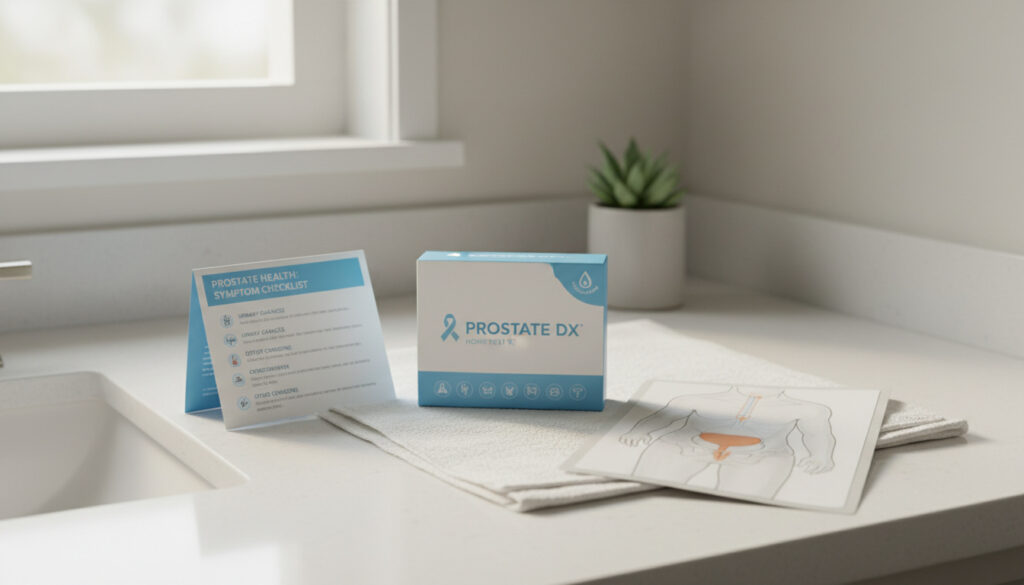
How to Check for Prostate Cancer at Home – Symptoms and Home Tests
Many men wonder whether they can screen for prostate cancer from the privacy of their homes. The question reflects growing interest in early detection combined with concerns about invasive clinical procedures.
While certain symptoms can be monitored at home and new testing technologies show promise, medical authorities emphasize that no home method can definitively diagnose prostate cancer. Understanding the boundaries between home monitoring and clinical diagnosis remains essential for effective health management.
Can You Check for Prostate Cancer at Home?
The short answer is nuanced. Men can monitor specific symptoms and utilize emerging self-testing technologies, but these approaches detect warning signs rather than confirming cancer.
No Definitive Home Test
Current home methods cannot provide a cancer diagnosis.
Symptom Monitoring
Urinary and physical changes can be tracked at home.
Self-Exam Limitations
Physical self-examination has poor reliability for detection.
Clinical Confirmation Required
All home findings require professional medical follow-up.
- PSA alone cannot diagnose cancer: Elevated levels indicate potential prostate problems but require further investigation.
- Digital rectal exams are no longer standalone screens: Research demonstrates poor performance for routine cancer detection.
- Home PSA kits carry accuracy risks: Some kits have been recalled due to failure to produce accurate results.
- New urine tests show promise: The MPS2 test analyzes 18 genes associated with prostate cancer.
- False reassurance is a danger: Normal home test results may delay necessary clinical evaluation.
- Timing matters: Laboratory-based home tests typically require two to five working days for results.
| Fact | Details |
|---|---|
| Home Test Reliability | Low for definitive cancer detection |
| PSA Threshold | Above 4 ng/mL traditionally warrants investigation, but not definitive |
| Common Symptoms | Frequent urination, blood in urine or semen, erectile dysfunction |
| MPS2 Gene Analysis | 18 genes analyzed; could avoid 34%-53% of unnecessary biopsies |
| PSA Forms | Percent-free PSA and complexed PSA influence interpretation |
| Recommended Action | Consult urologist or GP for clinical screening |
What Are the Early Signs of Prostate Cancer You Can Monitor at Home?
While home monitoring cannot diagnose cancer, recognizing changes in urinary and sexual function provides valuable indicators for seeking medical evaluation. The NHS notes that symptoms often affect urination and ejaculation.
What Symptoms of Prostate Cancer Can You Check at Home?
Men can observe several physical changes that may indicate prostate issues. These include increased frequency of urination, particularly at night, difficulty starting or maintaining urine flow, blood appearing in urine or semen, painful ejaculation, and persistent discomfort in the pelvic area or lower back.
Tracking the duration and progression of symptoms provides crucial information for healthcare providers. Note when changes began and whether they worsen over weeks or months.
Are There Reliable At-Home Tests for Prostate Cancer?
The market offers several self-testing options, though their capabilities and limitations vary significantly.
Is There a Home Test for Prostate Cancer?
Two primary home testing technologies exist. The MyProstateScore 2.0 (MPS2) urine test represents a significant advancement, analyzing 18 genes associated with prostate cancer. Researchers at Vanderbilt and the University of Michigan demonstrated this test can be performed without a digital rectal exam while maintaining high accuracy for identifying clinically significant cancers. The study suggests this approach would have allowed patients with elevated PSA levels to avoid 34% to 53% of unnecessary biopsies.
PSA blood self-test kits are increasingly available online and at pharmacies, allowing men to collect blood samples at home via finger prick. According to Prostate Cancer UK, these kits provide a preliminary indicator but significant limitations exist.
Are At-Home Prostate Cancer Tests Accurate?
Accuracy concerns plague home PSA testing. Medical experts note that PSA levels above 4 ng/mL traditionally prompt further investigation, yet this threshold proves far from definitive. Multiple factors influence PSA readings, including age, overall health, prior cancer history, and medications. Consequently, some men with elevated PSA do not have cancer, while others with levels below 4 ng/mL may still develop the disease.
Additionally, PSA exists in two forms: percent-free PSA (unattached to proteins) and complexed PSA (attached to proteins). The ratio between these forms influences result interpretation, making PSA testing far from conclusive without professional analysis.
A BBC report warned that PSA self-test kits can produce inaccurate results leading to anxiety and false reassurance. Cancer Research UK documented that some kits have been recalled due to failure to produce accurate results.
When Should You See a Doctor After a Home Check?
Self-testing results require professional interpretation and follow-up, regardless of the outcome.
What Are Prostate Cancer Risk Factors to Assess at Home?
Men should consider clinical screening discussions if they are over 50, have a family history of prostate cancer, or are of African or Caribbean descent, as these factors increase risk. However, risk assessment alone cannot replace diagnostic testing.
How Reliable Is Prostate Self-Examination?
The digital rectal exam (DRE), once standard practice, is no longer recommended as a standalone screening test. Research published in PMC demonstrates poor performance for prostate cancer screening when used in isolation. Men attempting self-examination face significant limitations in detecting abnormalities accurately.
If self-testing reveals elevated PSA levels, a GP should repeat the blood test before determining further action. Health organizations recommend consulting a healthcare provider who can evaluate results alongside age, risk factors, and overall health.
What Is the Typical Path From Home Concern to Clinical Diagnosis?
Understanding the progression from initial suspicion to confirmed diagnosis helps men navigate the healthcare system effectively.
- Symptom Recognition: Noting urinary changes, blood in semen, or pelvic discomfort during daily activities.
- Initial Home Assessment: Using symptom checklists or home PSA kits to gauge concern levels.
- Primary Care Consultation: Visiting a GP to report findings and undergo repeat PSA testing or physical examination.
- Specialist Referral: Meeting with a urologist for comprehensive evaluation if initial tests suggest abnormalities.
- Diagnostic Confirmation: Undergoing MRI scans or biopsies to confirm or rule out cancerous cells.
What Can Home Checks Actually Reveal About Prostate Cancer?
Distinguishing between what home monitoring can and cannot establish prevents dangerous delays in treatment.
Established Information
- Home monitoring can track urinary frequency and flow changes
- PSA levels indicate potential prostate problems requiring investigation
- Family history and age are assessable risk factors
- New urine tests show high accuracy for gene markers
What Remains Unclear
- Home checks cannot definitively diagnose cancer
- PSA thresholds vary by individual; 4 ng/mL is not absolute
- Physical self-exams cannot reliably detect tumors
- Home kits may miss cancers or create false alarms
Why Professional Screening Remains Essential
Clinical screening incorporates multiple diagnostic tools unavailable in home settings. Healthcare providers evaluate PSA trends over time, perform specialized physical examinations, and order imaging studies that provide definitive tissue analysis. This comprehensive approach addresses the complexity of prostate cancer detection, where benign conditions often mimic malignant ones.
The evolution away from routine DRE toward biomarker testing reflects ongoing improvements in detection accuracy. Men seeking to maintain urinary health may also consider resources like Incontinence Pants for Women – Best 2025 Picks and Guide for related wellness products, though these address different conditions than prostate cancer screening.
What Do Medical Authorities Say About Home Detection?
Leading health organizations emphasize the limitations of home testing while acknowledging emerging technologies.
Men receive results without professional guidance, which can lead to unnecessary anxiety or false reassurance.
— Prostate Cancer UK
The MyProstateScore 2.0 urine test can be performed without a digital rectal exam while maintaining high accuracy for identifying clinically significant prostate cancers.
— Vanderbilt University Medical Center Research Team
Key Takeaways on Home Prostate Cancer Monitoring
Home monitoring serves as an early warning system rather than a diagnostic tool. While symptom tracking and emerging urine tests like MPS2 offer valuable screening capabilities, they cannot replace clinical evaluation. Men concerned about prostate health should discuss screening options with healthcare providers who can interpret results within the context of individual risk factors. For additional health monitoring resources, see Incontinence Pants for Women – 2025 Buying Guide.
Frequently Asked Questions
Can you feel prostate cancer during self-exam?
Physical self-examination cannot reliably detect prostate cancer. The digital rectal exam, once standard, shows poor performance for screening and is no longer recommended as a standalone test.
How do you perform a prostate self-exam step by step?
Medical authorities do not recommend self-examination due to poor reliability and potential for missed diagnoses. Clinical screening by qualified healthcare providers ensures proper technique and interpretation.
What are the best at-home ways to screen for prostate cancer?
Monitoring urinary symptoms and using validated home PSA kits provide preliminary indicators. However, the MyProstateScore 2.0 urine test shows the most promise for accurate home-based screening.
How long does it take to get results from a home PSA test?
Laboratory-based home PSA tests typically require two to five working days for results to be processed and returned to the patient.
What should you do if you find blood in your urine at home?
Blood in urine requires immediate medical consultation. While not always indicative of cancer, it signals potential prostate or urinary tract issues needing professional evaluation.
More related posts
 Back to Wall Toilet Guide: Pros, Cons, Installation & Tips
 Evri Track a Parcel: How to Track Your Evri Parcel
 Cast of Two Pints of Lager and a Packet of Crisps – Actors Roles Changes
 BT Wholesale Speed Test Retired: What Happened & Alternatives
 Beauty and the Beast: 1991 vs 2017 Cast, Lyrics, Plot
 Incontinence Pants for Women – Best 2025 Picks and Guide
 Best Chinese Takeaway Near Me – Top Rated Open Now
 London Tube Map 2024 – Official PDF Download Guide