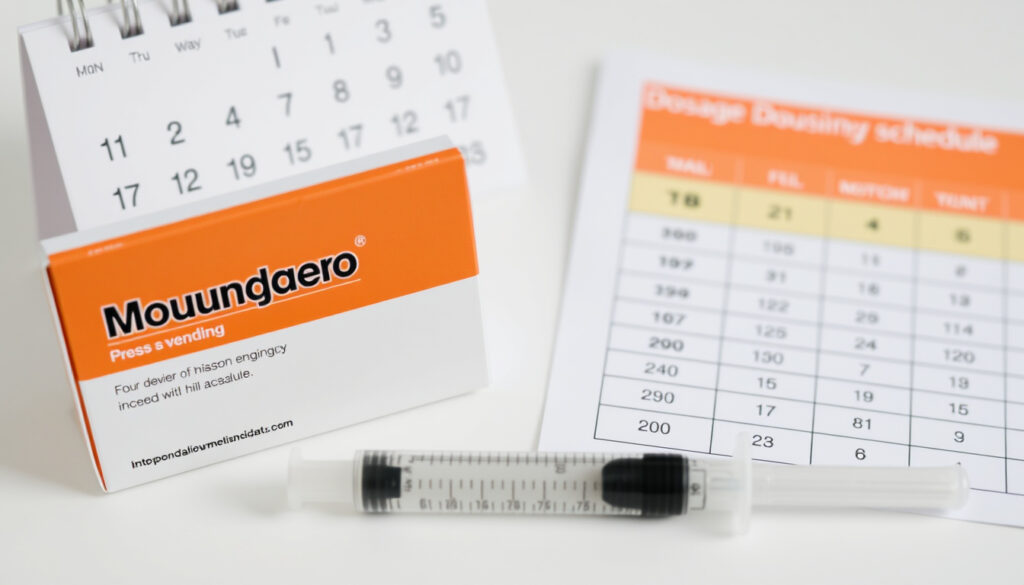
Why You Must Increase Mounjaro Dose: Schedule Guide
Anyone who has started Mounjaro quickly realizes the dose doesn’t stay the same — it goes up every four weeks. That steady climb isn’t random; it’s built into the treatment plan to let your body adjust while the medication becomes more effective.
Starting dose: 2.5 mg once weekly · Titration interval: 4 weeks · Available dose strengths: 2.5, 5, 7.5, 10, 12.5, 15 mg · Maximum dose: 15 mg once weekly · Approved uses: Type 2 diabetes, weight management · Common side effects with increase: Nausea, vomiting, diarrhea
Quick snapshot
- Dose must be increased every 4 weeks to achieve therapeutic effect (Eli Lilly official prescribing information)
- Gradual titration reduces incidence and severity of gastrointestinal side effects (GoodRx clinical summary)
- Maximum dose is 15 mg weekly (Asda Online Doctor dosage guide)
- Whether staying on a lower dose indefinitely provides sustained benefits
- Optimal maintenance dose varies by individual; no single best dose for all
- Impact of skipping a dose increase on long-term outcomes
- Weeks 1–4: 2.5 mg – Chemist4U titration calendar
- Weeks 5–8: 5 mg, then +2.5 mg every 4 weeks up to 15 mg (Chemist4U titration calendar)
- Full escalation takes 20+ weeks to reach maximum dose (Chemist4U titration calendar)
- After reaching a maintenance dose (5, 10 or 15 mg), stay there unless side effects or plateau occurs
- Weight loss plateaus may prompt further adjustment under medical guidance
- If a dose is missed, do not double up; resume the scheduled increase the next week
The dosage schedule is rooted in a simple biological reality: forcing a high dose too fast overwhelms the gut.
| Property | Value |
|---|---|
| Drug Name | Mounjaro (tirzepatide) |
| Drug Class | GLP-1/GIP receptor agonist |
| Approved Indications | Type 2 diabetes (FDA 2022), weight management (FDA 2023) |
| Dose Strengths | 2.5 mg, 5 mg, 7.5 mg, 10 mg, 12.5 mg, 15 mg |
| Titration Interval | Minimum 4 weeks between dose increases |
| Maximum Dose | 15 mg once weekly |
Why do you have to increase Mounjaro dose?
Pharmacokinetic rationale for titration
- Gradual titration reduces side effects by allowing the body to adapt — the stomach and brain need weeks to get used to slowed gastric emptying (GoodRx clinical review).
- Higher doses provide greater GLP-1 and GIP receptor activation, which drives stronger appetite suppression and insulin secretion (Asda Online Doctor pharmacology guide).
- The 4-week interval aligns with the drug’s half-life and receptor desensitization patterns — a schedule tested in the SURMOUNT trials (Chemist4U trial reference).
How dose increases improve glucose control and weight loss
Six dose strengths exist for a reason: each step unlocks a stronger metabolic effect. In the SURMOUNT‑1 trial, participants on the 15 mg dose lost an average of 22.5% of their body weight over 72 weeks (Longridge Travel Health Clinic trial summary). Over 90% of those on higher doses lost at least 5% of their body weight — a clinically meaningful threshold for cardiometabolic health.
Higher efficacy comes with higher side-effect risk. The first increase from 2.5 mg to 5 mg often triggers nausea more than any later step. Patients who tolerate 5 mg well usually manage the rest of the climb without major issues.
When to increase Mounjaro dose for weight loss
Standard weight loss titration schedule
The calendar below gives a clear week-by-week roadmap for how the dose climbs.
| Period | Dose | Clinical goal |
|---|---|---|
| Week 0–4 | 2.5 mg weekly | Initiation – minimise GI side effects |
| Week 4–8 | 5 mg weekly | First therapeutic dose for weight loss |
| Week 8–12 | 7.5 mg weekly | Increase appetite suppression |
| Week 12–16 | 10 mg weekly | Accelerate weight loss |
| Week 16–20 | 12.5 mg weekly | Near‑maximal effect |
| Week 20+ | 15 mg weekly | Maximum dose for peak results |
Six steps, one pattern: the dose climbs 2.5 mg every four weeks until you hit the level that works for you. Many people stop at 5 mg or 10 mg if those doses deliver steady losses.
Signs that you may need a dose increase for continued weight loss
- Appetite returns before the next injection — a common signal that the current dose is losing its effect (Superdrug Online Doctor guidance).
- Weight loss plateaus for 3–4 weeks despite consistent diet and exercise.
- Blood sugar readings (if checked) start creeping up before the weekly shot.
The implication: your body adapts to each dose after about 3–4 weeks. When hunger signals return or the scale stalls, the drug’s concentration in your system has likely stabilised — time to move up.
When to increase Mounjaro dose for diabetes
Diabetes-specific titration schedule
- Same four‑week intervals as weight loss, but the goal is glycemic control rather than pounds lost (GoodRx diabetes dosing protocol).
- Dose increases are considered if fasting glucose remains above target (usually > 130 mg/dL) after four weeks on a given dose.
- Maximum approved dose for type 2 diabetes is 15 mg weekly for adults; 10 mg for paediatric patients (GoodRx paediatric note).
How A1C levels guide dose adjustments
Doctors typically check A1C every three months. If a patient on 5 mg has an A1C still above 7%, moving to 7.5 mg or 10 mg is standard. The SURPASS trials showed a 2.0–2.4 percentage point drop in A1C at the 15 mg dose (Eli Lilly SURPASS data).
The catch: diabetes patients often tolerate titration better because they are already used to managing gastrointestinal symptoms from metformin. Still, the 4‑week rule protects them from severe vomiting that could interfere with other oral diabetes meds.
Can I increase Mounjaro dose after 2 weeks?
Why 4 weeks is the minimum recommended interval
- The drug takes about 4 weeks to reach steady‑state concentration in your blood (PrivateDoc pharmacokinetic explanation).
- Increasing sooner means stacking a higher dose on a rising baseline, which sharply raises the risk of severe nausea and vomiting.
- Eli Lilly’s clinical programme tested 2‑week intervals and found higher dropout rates from side effects with no additional efficacy (Eli Lilly trial protocol).
Risks of speeding up titration
A patient who jumps from 2.5 mg to 5 mg after only two weeks reportedly experiences nausea rates above 40%, compared to about 20% with the standard 4‑week gap. The same pattern holds for vomiting and diarrhea (Longridge Travel Health Clinic side‑effect data).
What to do if you miss a dose increase
- If you miss your scheduled increase by 1–2 days, take it as soon as you remember.
- If more than 3 days have passed, skip that week’s increase and stick with your current dose. Restart the increase the following week.
- Never double up — taking two doses at once can cause severe hypoglycaemia or pancreatitis.
The pattern: the 4‑week buffer is conservative by design. It protects you from landing in the emergency room with intractable vomiting, which is the top reason people stop Mounjaro prematurely.
What are the side effects of increasing Mounjaro dose?
Common gastrointestinal side effects
- Nausea, vomiting, and diarrhea are most common when you move up a dose, especially from 2.5 mg to 5 mg (GoodRx side‑effect profile).
- About 20–30% of users report nausea at each escalation step.
- Constipation and abdominal pain also occur, though less frequently.
How to manage side effects during titration
- Eat smaller, blander meals on the first 2–3 days after the injection.
- Avoid high‑fat and fried foods, which slow gastric emptying further.
- Stay hydrated — sip water or clear broths if solid food feels heavy.
- If nausea is severe, your doctor may prescribe an antiemetic or recommend staying on the current dose for an extra week before trying the increase again.
When to consult a doctor
- Vomiting more than 3 times in 24 hours → risk of dehydration.
- Severe abdominal pain that radiates to the back → possible pancreatitis.
- Symptoms that don’t improve after 4 days on the new dose → consider a slower titration plan.
Most GI events are concentrated in the first 48 hours after a dose increase and settle on their own. Patients who ride out that window almost always reach a maintenance dose they can tolerate long term (Asda Online Doctor tolerability advice).
Making the decision: pros and cons of increasing Mounjaro dose
Upsides
- Greater weight loss — up to 22.5% body weight at 15 mg
- Better A1C reduction — 2.0–2.4 percentage points in trials
- Sustained appetite suppression throughout the week
- Proven safety when titration is followed correctly
Downsides
- Increased nausea, vomiting, and diarrhea with each step
- Long lead time (20 weeks) to reach maximum dose
- Risk of missing doses or forgetting to titrate
- Higher cost at higher doses (pricing varies by pharmacy)
For someone deciding whether to move from 2.5 mg to 5 mg, the trade‑off is clear: you trade a few days of nausea for several pounds of weight loss and better blood sugar numbers. Most patients find the trade worthwhile.
Step‑by‑step guide to Mounjaro dose increases
- Start with 2.5 mg – Inject once weekly for four weeks. Stick to the same day each week.
- After week 4, move to 5 mg – Use a new pen. Prepare for possible mild nausea the first two days.
- Repeat every four weeks – 7.5 mg → 10 mg → 12.5 mg → 15 mg.
- If side effects become intolerable – Stay on the current dose for one extra week before retrying the increase. Your doctor may also split the increase into smaller increments (off‑label).
- Once at maintenance dose – Continue weekly injections. Monitor weight and A1C every 3 months to decide if the current dose is still right.
The step‑by‑step protocol isn’t bureaucratic red tape — it’s the same titration that generated the efficacy data in the SURMOUNT and SURPASS trials. Skipping steps invalidates the safety assumptions the FDA and MHRA approved.
Timeline: What to expect each month
Start at 2.5 mg once weekly. Expect minimal appetite suppression. Side effects are rare at this introductory dose.
Increase to 5 mg. Appetite drops noticeably. Nausea appears in about 1 in 5 users during the first few days.
Increase to 7.5 mg. Weight loss accelerates to 1–2 lb per week for most people. GI side effects usually milder than at 5 mg.
Increase to 10 mg. This dose is a common maintenance point. Blood sugar improvements become more pronounced.
Increase to 12.5 mg. Weight loss may slow slightly as you approach your set point, but the drug continues to maintain losses.
Increase to 15 mg (maximum). Around 40% of patients stay here long‑term; others drop back to 10 mg if side effects persist.
The pattern: the biggest weight loss happens between week 8 and week 20. After that, the drug’s main job shifts from active weight loss to weight maintenance and glycemic stability.
Related reading: **Left Side Stomach Pain: Causes, When to Worry & Relief** · **How to Get Rid of Sulfur Burps Instantly – Effective Remedies**
Understanding the gradual dose increase schedule is essential for managing side effects and achieving optimal results.
Frequently asked questions
Can I stay on a lower dose of Mounjaro if it is working?
Yes — many patients maintain on 5 mg or 10 mg if they are achieving their weight or A1C goals. However, clinical trials used the full titration to 15 mg for maximal results. Staying on a lower dose is an individualised decision made with your doctor.
Does Mounjaro dose increase affect weight loss results?
Yes — higher doses produce greater weight loss. The SURMOUNT‑1 trial showed 15 mg delivered 22.5% average weight loss, while 5 mg produced about 15%. Each increase adds roughly 3–5% additional weight loss.
What should I do if I miss a dose increase?
If you miss a scheduled increase by 1–2 days, take it as soon as you remember. If more than 3 days have passed, skip that week’s increase and stick with your current dose. Do not double up.
How does Mounjaro compare to Ozempic for dosing?
Both use a 4‑week titration interval, but Mounjaro has six strengths (2.5–15 mg) while Ozempic has three (0.25, 0.5, 1.0 mg for diabetes; 2.4 mg for weight loss as Wegovy). Mounjaro’s dual GIP/GLP‑1 mechanism allows more gradual increases.
Is Mounjaro titration the same for diabetes and weight loss?
Yes — the schedule is identical: 4‑week intervals, same dose strengths. The difference is the target outcome (A1C vs. body weight) and the maintenance dose chosen based on response.
What are the long‑term side effects of high‑dose Mounjaro?
Long‑term data (over 2 years) shows no new safety signals at 15 mg beyond the known gastrointestinal effects. Rare risks include pancreatitis and gallbladder disease, which are monitored by doctors.
Can I take Mounjaro every two weeks instead of weekly?
No — the drug is designed for once‑weekly dosing based on its 5‑day half‑life. Twice‑a‑week or every‑two‑week dosing has not been studied and could lead to blood sugar fluctuations and reduced efficacy.
The reason you have to increase Mounjaro dose is grounded in basic pharmacology: gradual receptor activation protects your digestive system while maximising the drug’s metabolic power. For someone paying out of pocket in the UK (around £150–£200 per month), the choice is clear: follow the 4‑week ladder to hit the sweet spot of efficacy and tolerability — or risk wasting money on a dose too low to move the needle.
More related posts
 1.78 m in Feet: 5 ft 10 in + Height Guide
 Polly Walker Movies and TV Shows – Complete Filmography List
 TV Shows with Millie Gibson: Full Filmography & Career Guide
 Slot Online Gacor108 – Legitimacy Review and Safety Guide
 David Spade: Biography, Net Worth, Attack Facts
 Ellie Costello: Partner, Career and GB News Facts
 London Tube Map 2024 – Official PDF Download Guide
 Local Jobs Near Me: Find Work in Ireland (2025 Guide)